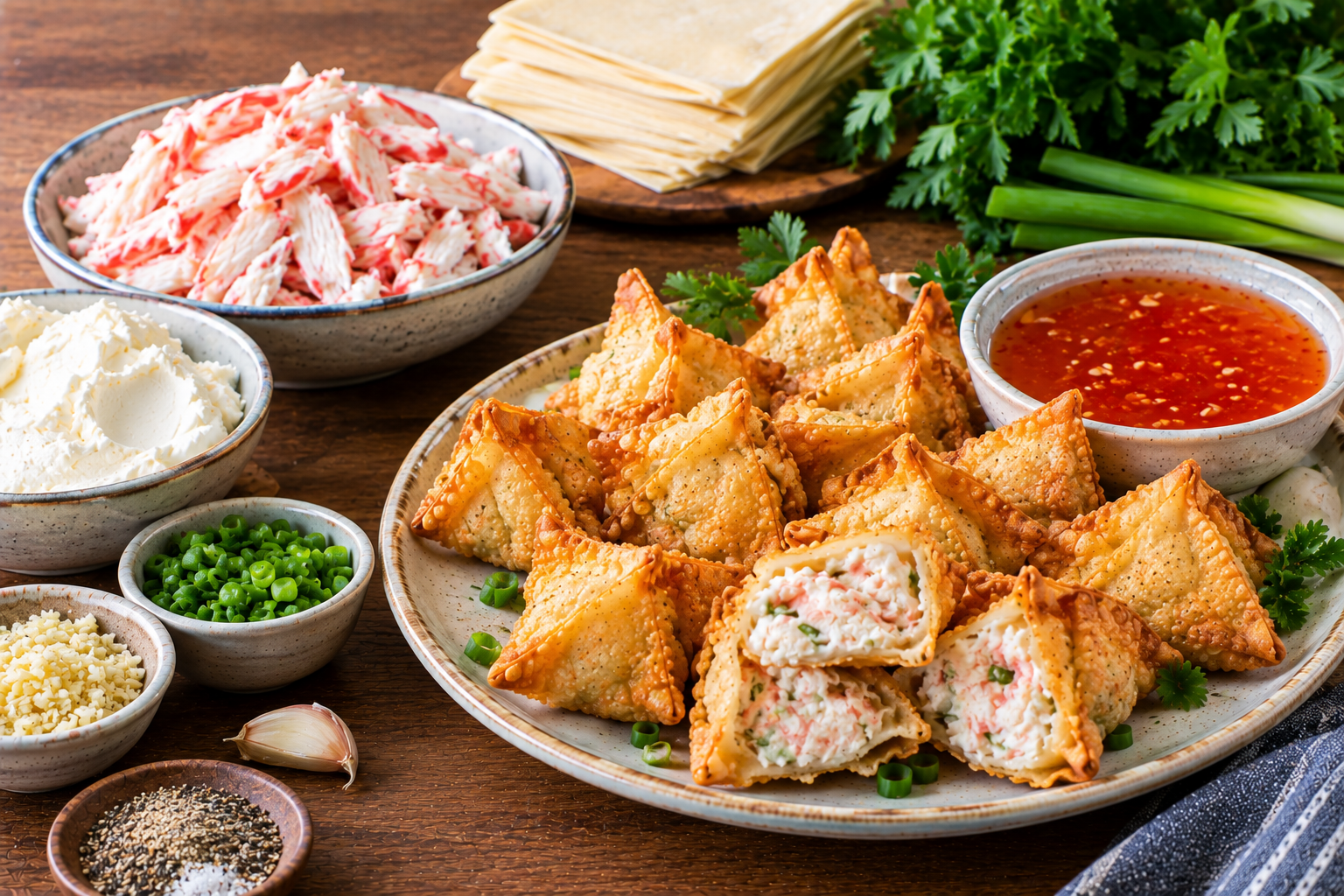
Crab rangoon is a popular appetizer that is also known as crab puffs, crab pillows, and cheese wontons.
For those who do not know, this side dish was developed in the United States; therefore, it is not a Chinese-origin starter. However, placing the filling in a wonton wrapper and deep-frying it is actually the only adaptation.
Historically, crab has always been an expensive delicacy in the urban areas because of its limited supply and high transportation costs.
As a result, the American Chinese started using Japanese-style imitation crab in their rangoons. Fake crab meat is made from white fish and offers a cheaper substitute for customers while maintaining the quality.
Restaurants tend to develop their own versions of the same dish; crab rangoon is another creation that holds true to this tradition.
The difference lies in whether the eateries use real or imitation crab meat. This, in turn, depends on where you dine and the crab rangoon ingredients used in the recipe.
How to Describe the Taste Profile of Crab Rangoon?
Each crab puff delivers a balanced blend of creaminess, savouriness, tanginess, and just a hint of sweetness. It also carries a subtle taste of the ocean.
The flavor profile is built because of the ingredients that seemingly appear to be incompatible but unexpectedly work well together. The filling is placed inside a square-shaped wheat-based dough, which is fried to golden perfection.
What Alternatives Do Restaurants Use?
Restaurants across the country have their own take on a crab rangoon. Some recipes use canned crab meat or imitation meat, while others skip crab meat altogether, real or otherwise. Some restaurants serve cream cheese wontons that look like crab rangoon, only without the seafood.
Recipes that consider real crab as the star ingredient in their rangoons typically make their filling with:
● Lump crab meat
● Snow crab flesh
● Cream cheese
● Green onion
● Minced garlic and ginger
● Soy sauce
● Worcestershire sauce
● Salt
● Black and white pepper
● Sugar
● Toasted sesame oil
● MSG
● Chilli (optional)
How Does Imitation Crab Get a Similar Seafood Taste?
A Fish-Based Product
Most imitation crab is made from white fish with a mild, neutral taste and a soft, springy texture. Normally, Alaska pollock is a go-to choice; however, some manufacturers also use Pacific whitefish, hake, or cod.
The selection criteria depend on the fish’s characteristics. It should contain the right amount of protein so that, when mixed with salt, it creates a springy, chewy texture.
More importantly, the freshness of the raw fish flesh and how it is handled greatly alters the quality of imitation crab.
At times, the protein is kept in a freezer rather than being processed immediately into crab; hence, it should be fresh enough to retain its color and ability to form a smooth paste, and it must not emit a bad odor.
Imitation Crab Procedure
Prepping the Fish
Manufacturers debone the fish and remove unwanted parts to make the paste or surimi. This step should not affect the fish’s natural characteristics, including pigmentation, protein content, fat, and enzymes. This ensures that the finished product retains the natural smell and flavor of the sea.
Mincing the Fish
The cleaned white fish flesh is minced into a fine gel-like substance. Normally, large industrial equipment breaks down the muscles into a fine paste. However, the mincing greatly helps in washing and further processing, achieving the desired consistency.
Washing and Removing Excess Water
Thoroughly washing the paste is an important step. Sometimes the process calls for passing the minced meat through multiple cleaning cycles. Generally, cold water is used to remove any blood, undesirable flavors, and unwanted substances from the minced meat.
Minced meat tends to absorb excess water, and manufacturers drain it but leave just enough moisture to prevent drying.
Storing the Surimi
This surimi is combined with other ingredients and serves as a strong base for the imitation crab. Some manufacturers freeze this mixture and transport it to another facility where it is thawed and turned into crab sticks.
Creating Crab-Like Texture and Shape
This step is where things start to get really interesting. At this point, manufacturers have to mimic the muscle fibers of real crab. The mixture is rolled into a thin sheet and cut into narrow strands and bundled together to get the same fibrous texture.
Additional Ingredients for Making Surimi
The other ingredients of imitation crab include:
● Water to achieve desired consistency
● Wheat, corn, potato, or tapioca starch to give structure
● Sugar to sweeten and give the ideal flavor
● Salt to help in processing and build texture
● Egg white to bind everything together
● Vegetable or soybean oil
● Synthetic or organic food coloring to give the paste a reddish-orange hue
● Preservatives, stabilizers, and other food additives increase the fake crab’s shelf life
Does Imitation Crab Contain Traces of Real Crab?
Diners should not assume that surimi excludes real crab meat entirely. To add a bit of authenticity, some recipes include bits of real crab meat, extract, or even flavoring. Therefore, it is best to confirm with the restaurant to avoid allergic reactions.
Where to Get Halal Crab Rangoon?
If you are searching for a restaurant that serves halal crab rangoon at affordable prices, then Turkey Berry Asian Halal Food should be your choice of destination. You can visit our website https://turkeyberryhalal.com/menu/ to explore more of the dishes we offer.