Nowhere else in the world does a single bowl of soup tell you so much about a place, its people, and its entire history.
Southeast Asian halal food is layered in a way that takes time to understand. The more you eat it, the more you realize how much thought goes into every dish. This is not simple food dressed up to look complicated. Then, halal food also requires another level of consideration and preparation.
It is genuinely complex cooking that developed over centuries across ten countries, each with its own character, and yet all connected by shared ingredients, shared techniques, and a shared love for bold flavor done right.
Every Dish Chases Balance
Ask any experienced cook from Thailand, Malaysia, Vietnam, or Indonesia what makes their food distinctive, and they will tell you the same thing. Balance.
A great Southeast Asian dish does not lead with one flavor. It balances all of them together. You get heat, sourness, sweetness, salt, and that deep savory note called umami hitting at the same time. None of them dominate. All of them belong.
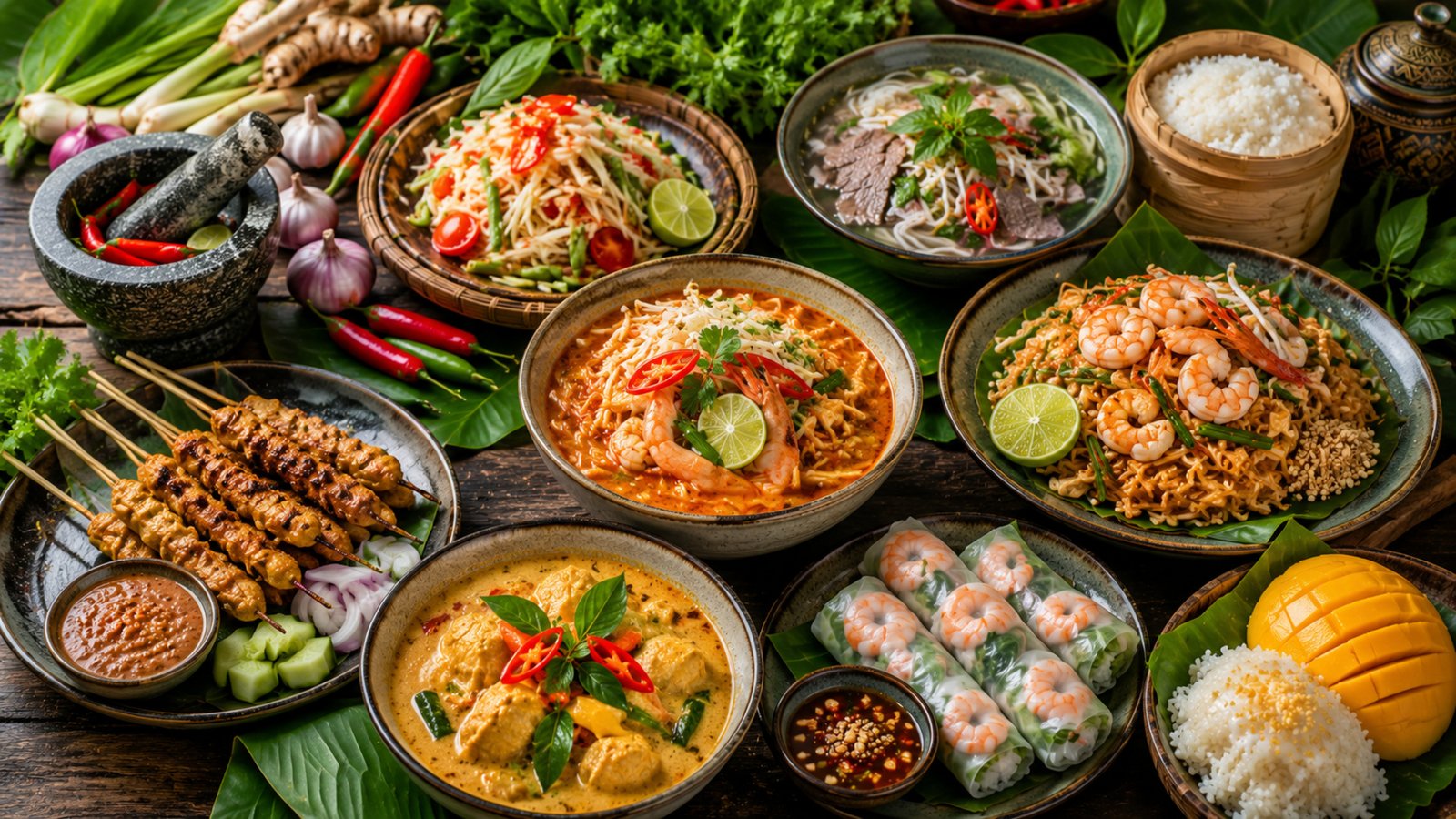
Thai tom yum is the easiest example. It is spicy and sour and fragrant and salty, and somehow none of those sensations fight each other. Indonesian rendang cooks for hours and comes out with rich, deep spice that has sweetness underneath it.
Vietnamese bun cha pairs smoky grilled pork with a dipping sauce that is tart, sweet, and herby all at once.
Getting this balance right is a skill that takes years. It is also the clearest sign that you are eating authentic Southeast Asian Halal food and not a shortcut version of it.
Rice Is Not a Side Dish Here
In most Western meals, rice sits at the edge of the plate. In Southeast Asia, rice is the center of the whole meal. Everything else exists around it.
Steamed jasmine rice, sticky rice, rice noodles, rice porridge, and fried rice at midnight from a street cart. Rice shows up at every meal, in every form, across every country in the region. Glutinous sticky rice carries such deep cultural meaning in Laos that it is woven into religious tradition and national identity.
Noodles are the close companion to rice across the region. Chinese traders and settlers brought noodle culture into Southeast Asia centuries ago, and it took root in a big way. Vietnamese pho, Malaysian laksa, Singaporean char kway teow. These are not fusion dishes. They are fully Southeast Asian now, shaped by the region into something distinct from where they originally came.
The Kitchen Smells Before You Even See the Food
Lemongrass. Galangal. Kaffir lime leaves. Garlic. Fresh chili. You know a Southeast Asian kitchen by the smell before anything else.
These aromatics are not garnishes or optional flavor additions. They are the structural foundation that holds the whole dish together. Lemongrass brings a clean citrus brightness to soups and curries. Galangal looks like ginger but tastes nothing like it. It has a sharper, almost piney quality that grounds many Thai and Indonesian dishes in a way ginger cannot replicate.
Fresh herbs served at the table are just as important as the aromatics cooked into the dish. Vietnamese cooks set out whole sprigs of mint, Thai basil, cilantro, and bean sprouts alongside noodle soups. Every person at the table builds their own bowl. The herbs are not decoration. They are half the flavor.
This reliance on fresh ingredients also makes Southeast Asian food nutritionally impressive. You are getting real vitamins and minerals from the herbs and vegetables, not from supplements added back after processing.
Fish Sauce Is the Secret Behind Almost Everything
Western cooks discovered umami relatively recently. Southeast Asian cooks have been building it deliberately for centuries, mostly through one ingredient: fish sauce.
Fish sauce is made by fermenting fish with salt over time. The result is a liquid that is pungent on its own but transforms into something invisible and essential when it goes into a dish. It adds salt, yes, but also a roundness and depth that plain salt cannot deliver. Thai cooking uses it constantly. So does Vietnamese, Cambodian, and much of Filipino and Indonesian cooking.
Shrimp paste works alongside fish sauce in many recipes. It goes by different names across the region. Belacan in Malaysia, terasi in Indonesia. Either way, it adds a fermented savory base that makes spice pastes, sambals, and curries taste like they have been cooking for hours, even when they have not.
For halal food preparation, these fermented ingredients need halal certification since the sourcing and production process matters under Islamic dietary law. Good Southeast Asian halal restaurants source certified versions that keep the authentic flavor intact.
Coconut Milk Does What Cream Does Everywhere Else
Southeast Asian cooks do not reach for butter or cream. They reach for coconut milk, and they use it generously.
Thick coconut milk goes into Malaysian and Indonesian curries to give them that rich, smooth body. Thai curries depend on it for both texture and the natural sweetness that softens chili heat. Coconut milk also shows up in desserts across the region, as the liquid base for puddings, sweet sticky rice, and cold drinks.
This makes a lot of Southeast Asian cooking naturally dairy-free without anyone having to try. It just is, because the ingredient never developed the same role in this part of the world. For halal diners especially, this is one more reason Southeast Asian food tends to work cleanly without requiring heavy substitutions.
Frequently Asked Questions
What are the key ingredients that define Southeast Asian flavors?
Lemongrass, galangal, kaffir lime leaves, fresh chili, fish sauce, shrimp paste, and coconut milk form the flavor backbone. Fresh herbs like Thai basil, mint, and cilantro add brightness to the table. Rice and noodles anchor most meals. Together, these ingredients create the balance of sweet, sour, salty, spicy, and savory that makes Southeast Asian food so recognizable. No single ingredient works alone here. They build on each other.
What are the core characteristics of South Asian vs. Southeast Asian cuisine?
South Asian food builds complexity through dried spice layering and uses dairy heavily through yogurt, ghee, and fresh cheese. Southeast Asian food relies on fresh aromatics over dried spices and uses coconut milk rather than dairy. South Asian cooking has the tandoor as a signature technique. Southeast Asian cooking has the wok. Both traditions have deep halal roots, but the ingredients and methods are quite different from each other.
What are the traditional cooking techniques used in Southeast Asian cuisine?
Stir-frying over high heat in a wok, steaming, grilling over charcoal, slow reduction cooking for dishes like rendang, and hand-pounding spice pastes in a mortar and pestle. These techniques were developed around available resources and are still used daily across the region. Each one produces something the others cannot. The wok creates sear and smoke. The mortar creates texture and releases aromatics differently from blending. Slow cooking concentrates flavor in a way fast heat never will.
Conclusion
Southeast Asian food earned its global reputation through centuries of real cooking, not through trends or marketing.
The balance of flavors, the fresh aromatics, the fermented depth, the coconut richness, the high-heat technique. All of it developed because cooks in this region cared deeply about flavor and passed that knowledge down through generations.
The halal food traditions running through Indonesian, Malaysian, and other Southeast Asian cuisines add another layer of meaning to food that already carries so much of it.
If you want to experience Southeast Asian halal food prepared the right way, Turkey Berry Halal is the place to start. Visit Turkey Berry Halal to see the menu and taste what authentic Southeast Asian cooking actually looks and feels like.