I still remember my first bite of real Thai green curry. It was 2019, at a tiny stall in Chiang Mai. The lady running it had been cooking there for thirty years. One spoonful and I understood why people fly across the world for this stuff.
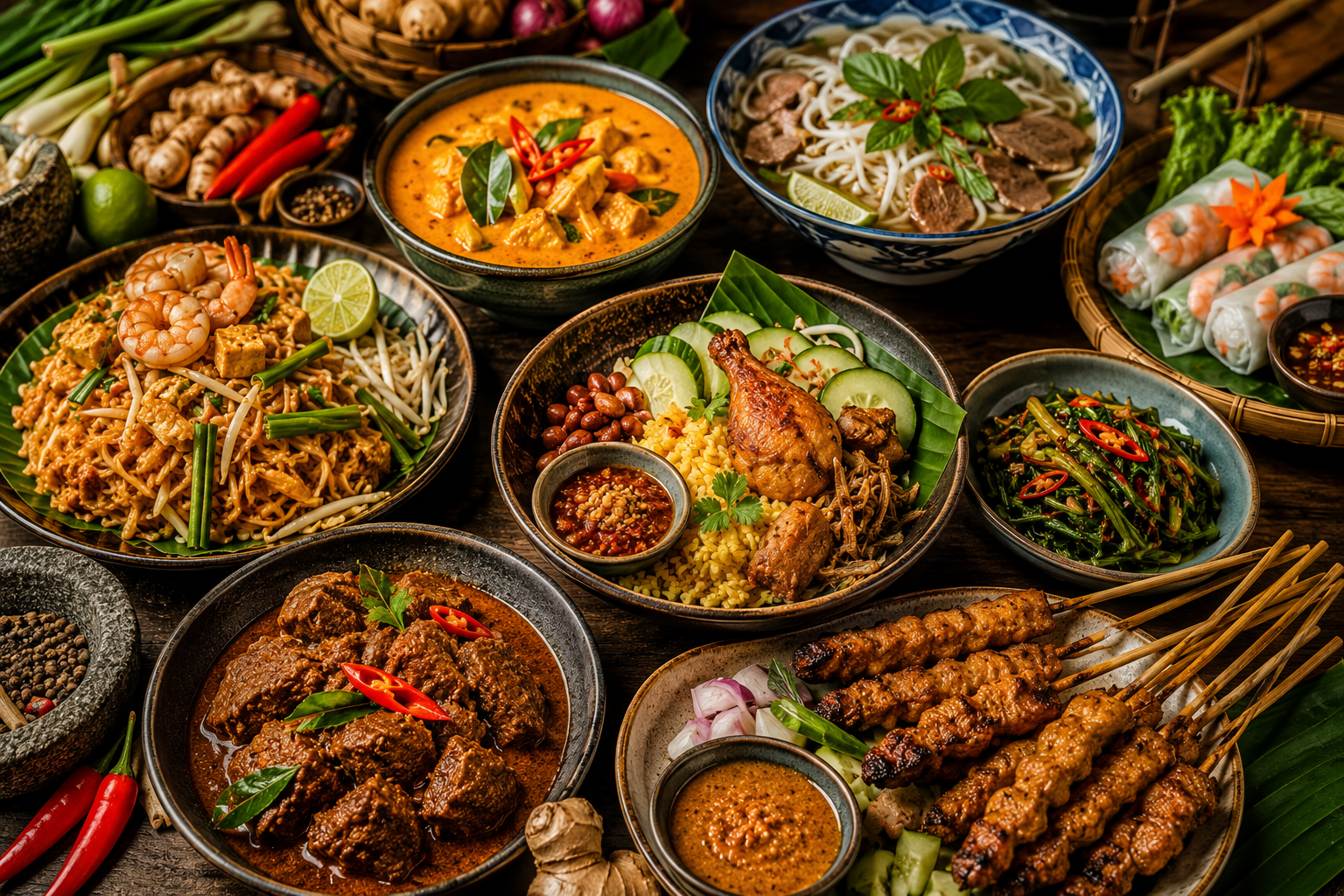
Southeast Asian halal food hits different. It is not just spicy or sweet, it tastes of lime, coconut, the chilies, the herbs, and something else you cannot quite name.
That something else is usually fish sauce or shrimp paste. Sounds gross, I know. But fermented anchovies add this deep, savory backbone that makes everything else pop. I learned that the hard way after trying to cook Pad Thai without it. Total disaster.
Fresh is Everything Here
Walk through any morning market in Vietnam or Indonesia. You will see what I mean. Cooks buy herbs that were still in the ground a few hours ago. Lemongrass, Thai basil, galangal, kaffir lime leaves. They do not mess around with dried substitutes.
The real stuff gets pounded in a mortar until the oils release. That smell alone is worth the trip. I tried using a food processor once. My Indonesian friend laughed at me for a week. She was right. The texture was wrong. The flavor was flat.
Halal Food Runs Deep in This Region
Here is something a lot of people miss. Halal food shapes a huge chunk of Southeast Asian cuisine. Indonesia has 231 million Muslims. Malaysia’s halal standards are strict and serious. This is not just about religion. It is about quality control.
Halal certification means clean sourcing, ethical treatment, and careful preparation. I have eaten halal food across Malaysia and Singapore for years. The consistency is unreal.
If you want good halal Southeast Asian meals, check out Turkey Berry Halal. They know what they are doing. Their halal food variety is next level.
That Five-Flavor Thing is Real
People talk about balance in Southeast Asian food like it is some mystical concept. It is not; it is just practice: sweet, sour, salty, bitter, umami.
Thai cooks adjust as they go. They taste, tweak, taste again. Tom Yum soup is the perfect example. You get hit with sour lime, then salty fish sauce, then heat from chilies, then a little sweetness to round it off. It should not work, but strangely, it does.
Because someone stood over that pot and made sure nothing overpowered anything else. Vietnamese Pho takes hours of simmering bones with star anise and cinnamon. The patience is insane. But you taste every minute of it.
Fermentation is Where the Magic Hides
Fish sauce stinks, straight up. I opened my first bottle in 2018 and almost threw it out. But cook it down and it becomes this salty, umami bomb. Shrimp paste smells even worse. Raw, it is rough. Fried into a sambal? Incredible.
Indonesian tempeh is fermented soybeans that taste nutty and hold up to any sauce. Fermented foods are huge for gut health now. Scientists keep publishing studies about it. Southeast Asian cooks have known this for centuries. They just did not write papers about it.
It is Healthier Than You Think
A full Vietnamese meal runs about 500 calories. I tracked it once after a trip to Hanoi. Grilled meat, fresh herbs, rice, broth. You feel full but not sluggish. The cooking methods help. Grilling, steaming, quick stir-frying. Not a lot of heavy oil.
Chilies boost your metabolism. Ginger and garlic show up in almost everything. My grandmother would have called this halal food Southeast Asian Cuisine that is medicine. She was not wrong.
The Techniques Take Years to Learn
Wok hei is that smoky flavor from a screaming hot wok. It takes serious skill. You cannot get it from a home stove easily. Mortar and pestle grinding is another thing.
The angle, the pressure, the rhythm. It matters. Clay pot slow-simmering concentrates broth into something thick and comforting. These methods get passed down. You watch, you practice, you fail, you try again. No shortcut.
Frequently Asked Questions
What is the secret ingredient that makes Southeast Asian food taste so rich?
There is no single secret. It is fresh herbs, fermented pastes like fish sauce, and time. Cooks pound aromatics by hand. They let flavors build slowly. That effort shows up in the final dish. Skip the shortcuts and you taste the difference.
How does Southeast Asian cuisine perfectly balance 5 flavors in one dish?
Cooks taste constantly while they work. They add lime, then fish sauce, then palm sugar, then adjust again. Nothing is set in stone. Every pot gets personal attention. That hands-on care creates harmony. Not a formula.
Why does Southeast Asian food feel so light yet bursting with flavor?
Fresh ingredients and quick cooking keep it light. Herbs and spices deliver intensity without heavy calories. Natural fats like coconut milk digest easily. The cuisine avoids cream and butter. It relies on broth, citrus, and aromatics instead. That is the trick.
Conclusion
I have eaten my way through a lot of Southeast Asia over the years. The food sticks with you, not just the flavors, but the people behind them. The lady in Chiang Mai with her thirty-year green curry.
The Bangkok vendor with his two-minute Pad Thai. The halal food in Malaysia keeping standards high for millions of people. This cuisine works because it respects ingredients and the people who prepare them. It balances flavors through skill, not luck.
It feels light because it stays close to nature. For anyone wanting authentic Southeast Asian halal food, Turkey Berry Halal.com is worth a look. The food will keep changing and growing. But the heart of it stays the same. That is why Southeast Asian cuisine is so good.