If you have ever taken one bite of a proper Thai tom yum and felt five different things hit your tongue at once, you already know Southeast Asian food plays by different rules.
Most people group all Asian food together. That is a big mistake. Chinese food is not Thai food, or Vietnamese food, or East Asian cuisine.
The differences go way deeper than geography. They run through history, climate, religion, trade, and the way people actually live and cook.
We have spent years exploring Southeast Asian food, and the more you dig into it, the more layers you find. So here is a proper breakdown of what makes this cuisine stand out from everything else.
Flavor Game Is Completely Different
When you go to a Chinese restaurant, you get deep, savory flavors with some sweetness mixed in. If you go to a Japanese restaurant, everything is subtle, clean, and precise. On the other hand, Korean food hits you with heat and fermented funk.
All of these are great in their own way. But Southeast Asian food does something none of them do. It chases all five flavors at the same time: sweet, salty, sour, spicy, and bitter all show up together in one bowl.
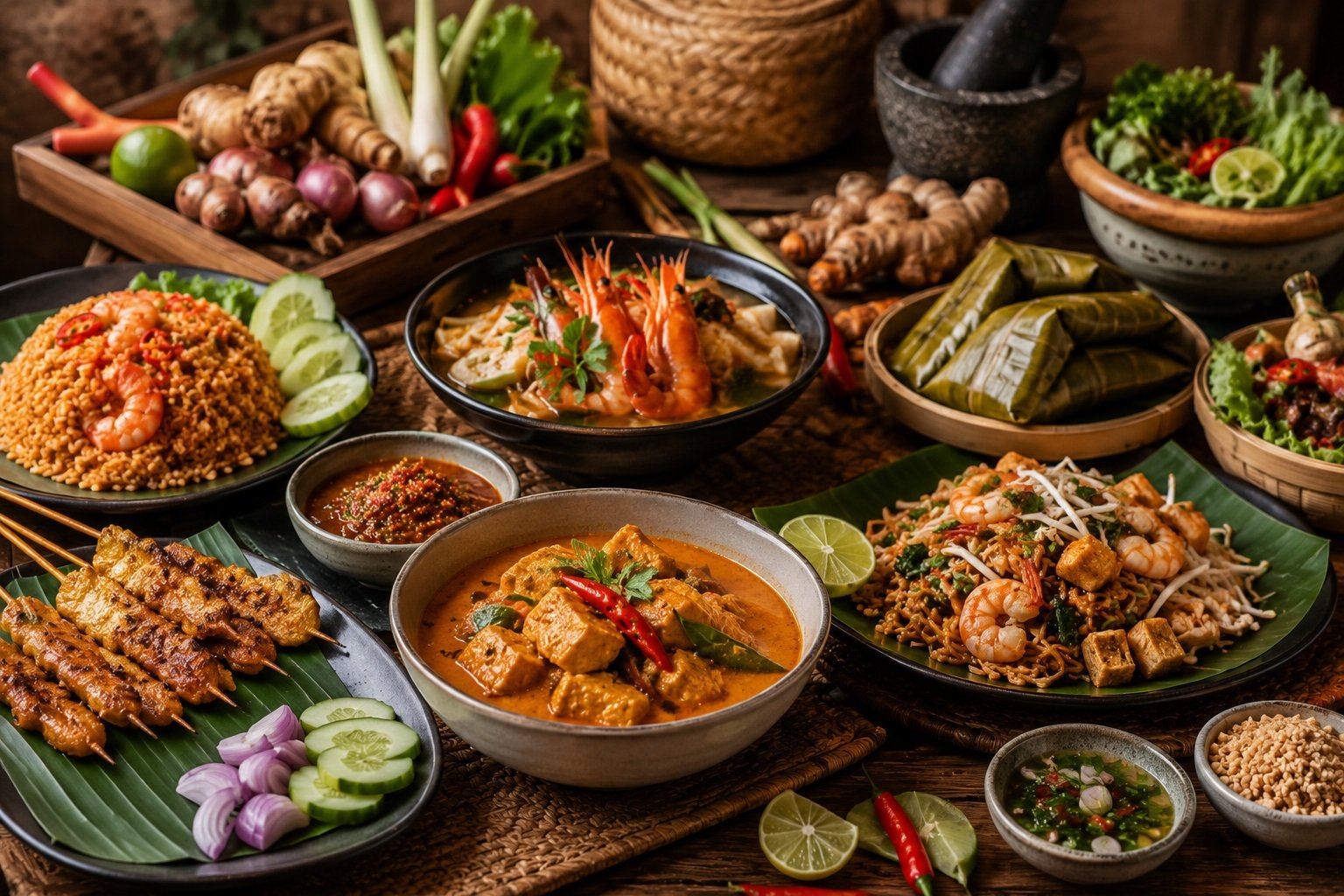
Take tom yum soup from Thailand. Instantly, lime juice brings sourness, the fish sauce brings salt and depth; meanwhile, palm sugar softens the edges, and fresh chilies bring heat.
Uniquely, kaffir lime leaves add that slightly bitter, citrusy note. Every single spoonful hits every part of your mouth.
There are no accidents; Southeast Asian cooks have been tuning this balance for generations. There are no exact measurements either.
You taste as you cook, a little more tamarind here, another squeeze of lime there; the end goal is harmony, not one flavor dominating the others.
Herbs and Ingredients Are Tropical and Completely Unique
As you walk through a wet market in Kuala Lumpur or a morning market in Chiang Mai, you will smell things that do not exist in a Chinese or Japanese supermarket. That difference is the whole story.
Firstly, lemongrass is one of the region’s most important ingredients. It hits a clean citrus without any acidity and goes into soups, curries, and marinades across Thailand, Vietnam, Malaysia, and Indonesia.
Then, galangal looks like ginger from the outside but tastes sharper, more piney, and slightly medicinal. It is not a substitute for ginger. It is its own thing entirely.
What’s more, kaffir lime leaves add a sharp, spicy lime scent to Thai curries and Indonesian sambals. Pandan leaves bring a sweet, slightly vanilla aroma to rice and desserts across Southeast Asia. These are not optional garnishes. They are the foundation of the flavor.
East Asian cooking just does not have this combination. Soy sauce, sesame oil, miso, and rice vinegar are the flavor workhorses of East Asia. They are excellent. But they come from a completely different pantry.
Rice and Tropical Produce Define the Foundation
Rice is central to all of Asia, but Southeast Asia uses it differently depending on where you are. Thailand and Vietnam cook jasmine rice daily. Laos and northern Thailand eat sticky glutinous rice at almost every meal.
In Indonesia and Malaysia, plain steamed rice serves as the neutral base that soaks up the bold flavors around it. Rice is not a side dish here. It is the anchor.
The tropical climate also means Southeast Asian cooks have access to ingredients that simply do not grow in East Asia. Jackfruit, papaya, rambutan, mango, and durian are not just desserts. They go into savory dishes, too.
Thai green papaya salad is one of the most popular street foods in the entire region. Unripe mango appears in salads and condiments across Vietnam, the Philippines, and Indonesia. That tropical freshness gives even rich dishes a brightness that keeps them from feeling heavy.
Frequently Asked Questions
How does Southeast Asian cooking balance the five core flavors differently from East Asian cuisines?
East Asian cooking typically builds each dish around one or two dominant flavors. Chinese cooking goes deep into savory and umami. Japanese food keeps things subtle and slightly sweet. Korean food leads with fermented heat. Southeast Asian cooking deliberately targets all five flavors at once in a single dish. Cooks use tamarind and lime for sourness, palm sugar for sweetness, fish sauce for salt, fresh chilies for heat, and bitter herbs to tie it together.
What are the signature herbs and staple ingredients that give Southeast Asian dishes their distinct tropical aroma and taste?
Lemongrass, galangal, kaffir lime leaves, pandan leaves, Thai basil, Vietnamese mint, and laksa leaf are the core aromatics. Fish sauce, shrimp paste, tamarind, coconut milk, and palm sugar are the backbone flavor ingredients. These come directly from the tropical environment of the region, and none of them have real substitutes. They are what make Southeast Asian food smell and taste the way it does, and they simply do not feature in East Asian cooking in any meaningful way.
In what ways have historical trade routes and cultural exchanges shaped the unique identity of Southeast Asian street food?
The region sat at the center of the global spice trade for thousands of years. Indian merchants brought curry techniques and spice layering. Arab traders brought Islam and established halal food practices that still define cooking in Indonesia, Malaysia, and beyond. Chinese migrants brought wok cooking, noodles, and tofu. Portuguese colonizers introduced chili from the Americas in the 1500s, which completely changed the heat profile of the entire region. Spanish colonization shaped Filipino cooking for over 300 years. All of these influences did not replace local cooking. They got absorbed into it and mixed with local tropical ingredients and traditions.
Final Thoughts
Southeast Asian food earns its reputation for a real reason. The flavor balance is more demanding and more ambitious than almost any other cuisine on the planet. The ingredients are rooted in a tropical environment that you cannot replicate anywhere else.
The history behind every dish runs thousands of years deep through trade routes, migrations, and religious and cultural exchanges that shaped the way people grew, cooked, and shared food across the entire region.
This is food built by real people over a very long time. Every bowl of laksa, every plate of nasi lemak, every banh mi sold on a street corner in Hanoi carries that weight. You just have to take a bite to feel it. For more on halal Southeast Asian food and where to find authentic flavors, visit turkeyberryhalal.com.