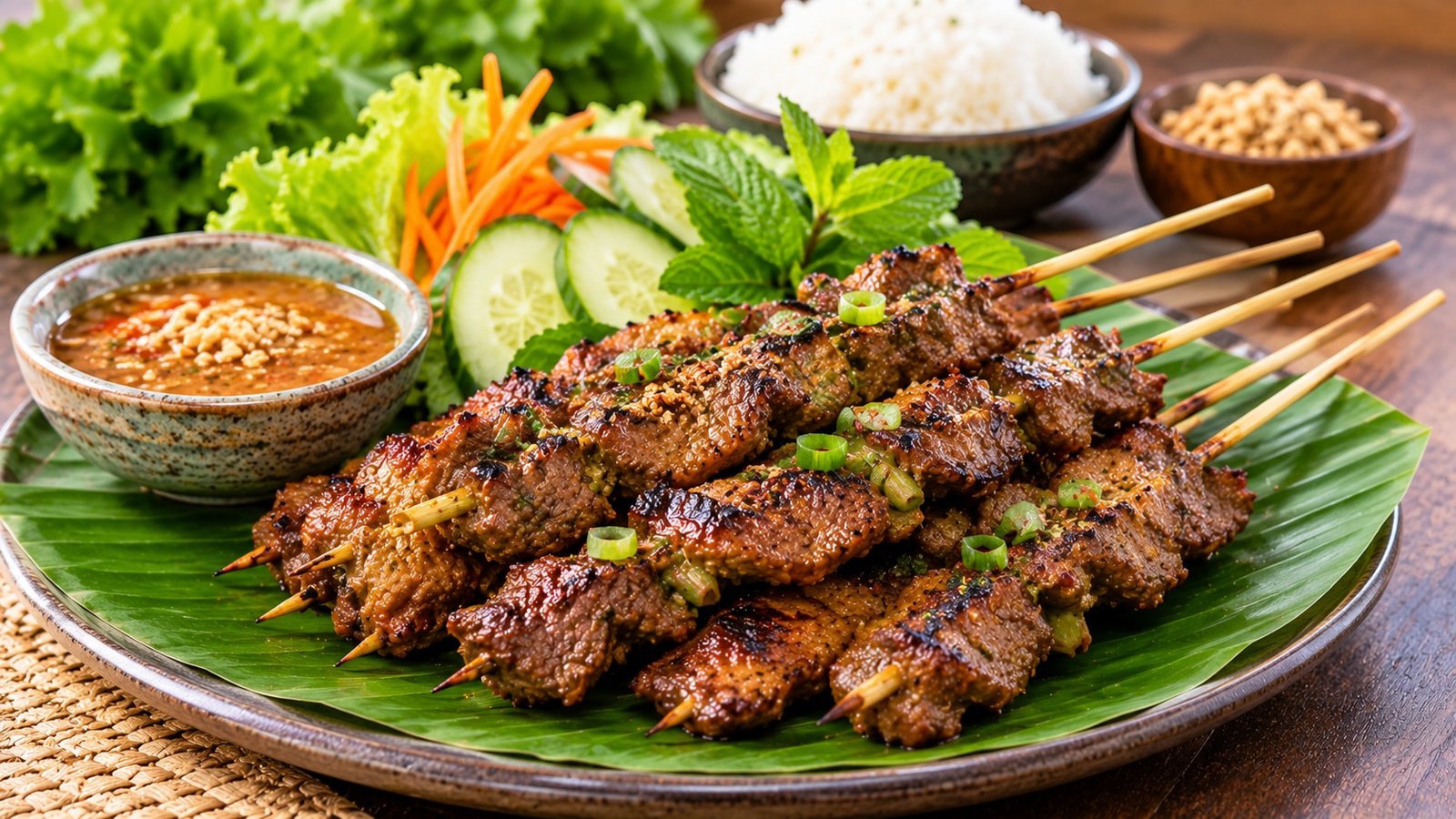
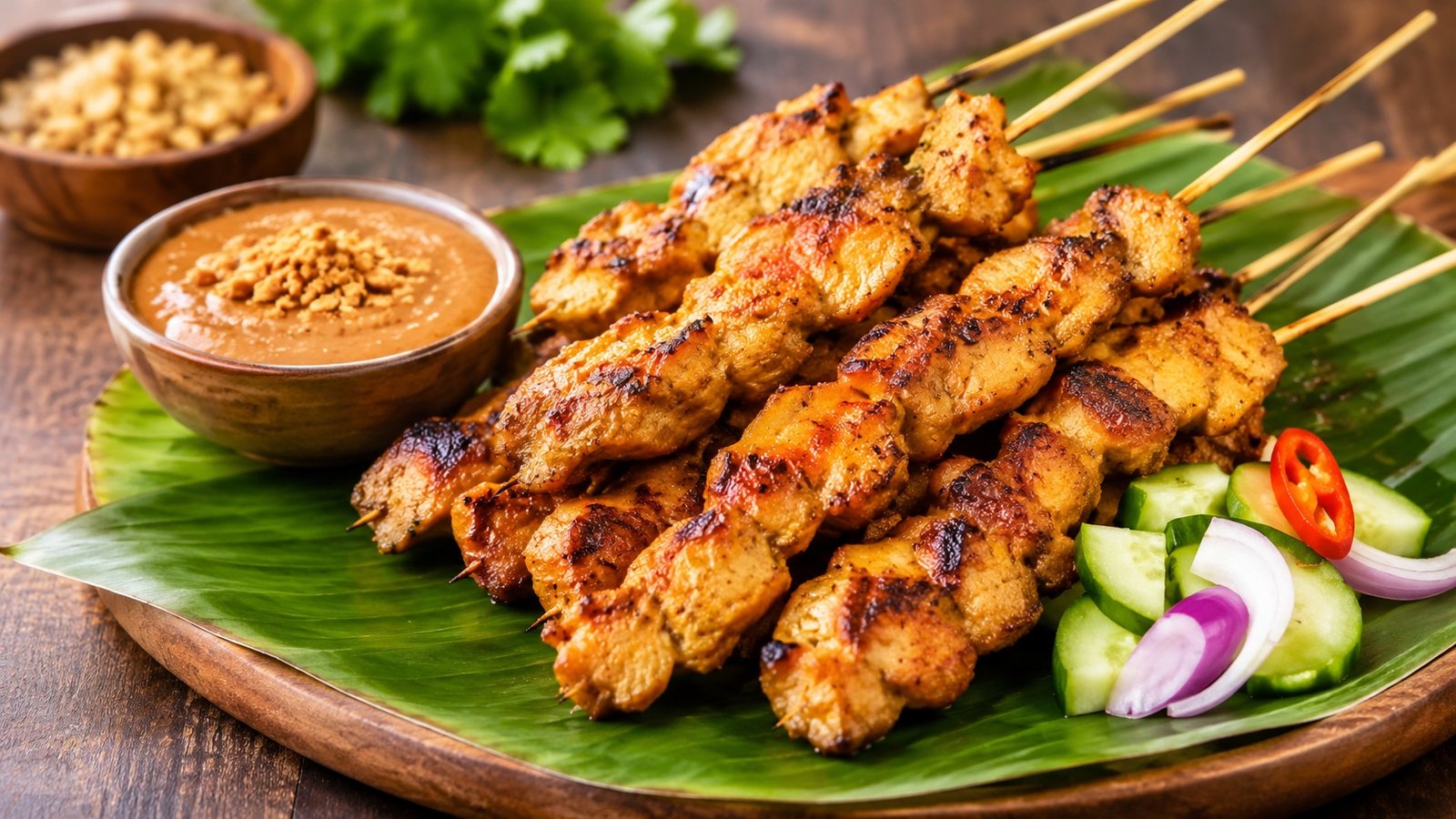
Chicken satay has a savory, slightly sweet flavor with warm spices and a smoky finish from the grill. The chicken is marinated before cooking, giving the skewers their distinctive aroma and seasoning. When served with peanut sauce, each bite gets an extra layer of nutty richness.
Popular across Southeast Asia, chicken satay comes in different regional styles. Some recipes emphasize turmeric and coriander, while others use lemongrass, garlic, or sweet soy sauce.
If you’ve never tried halal chicken satay, here’s what to expect from its flavor, texture, and traditional accompaniments.
The First Impression: Smoke and Char
One of the first things you may notice about chicken satay is its grilled aroma.
As the chicken cooks, the surface browns and develops savory flavors. When cooked over charcoal, the skewers can also pick up a distinctive smoky taste.
The marinade contributes to that flavor, too. Ingredients such as garlic, spices, and sugar create a seasoned coating that browns as the chicken grills.
Some pieces develop lightly charred edges, adding a pleasant contrast to the tender meat inside.
The level of smokiness depends on the cooking method. Charcoal-grilled satay may taste smokier than chicken prepared on a gas grill or indoor grill, but both can produce flavorful skewers.
Layers of Spice and Aromatics
Chicken satay gets much of its recognizable flavor from its marinade.
Although recipes differ, turmeric, coriander, cumin, garlic, and lemongrass are common ingredients in various Southeast Asian preparations.
Turmeric adds an earthy note and often gives the chicken a golden color. Coriander contributes a mild citrusy warmth, while cumin adds a deeper, earthy flavor.
Garlic provides a savory base, and lemongrass brings a fresh, fragrant quality that balances the richer seasonings.
Some versions also use ginger, galangal, chili, or sweet soy sauce.
These ingredients create a layered flavor without necessarily making the chicken very spicy.
Depending on the recipe, halal chicken satay can taste mildly sweet, savory, aromatic, or slightly spicy. The seasoning complements the grilled chicken rather than overpowering it.
The Importance of the Dipping Sauce
Chicken satay is delicious on its own, but peanut sauce adds another dimension to the dish.
The sauce typically has a rich, nutty flavor with a balance of savory and sweet notes. Depending on the recipe, it may also include chili, lime, tamarind, or other seasonings that add heat or acidity.
Its creamy texture coats the grilled chicken, bringing together the smoky meat and fragrant marinade.
The combination works especially well when the chicken has lightly charred edges.
Fresh vegetables or pickled accompaniments can provide a refreshing contrast to the richness of the peanut sauce.
Together, the chicken, sauce, and sides create a satisfying mix of flavors.
How Texture Complements the Experience
Flavor is a big part of chicken satay’s appeal, but texture matters just as much.
Well-prepared satay should have tender chicken with a lightly browned exterior. The exact texture depends on the cut of meat, marinade, and grilling technique.
Achieving Tender and Juicy Meat
Chicken thighs are commonly used for satay because their higher fat content helps them remain juicy during cooking.
Chicken breast is another option, although it can dry out more easily if overcooked.
Cutting the chicken into evenly sized pieces helps the skewers cook consistently.
When properly cooked, the meat should be tender and easy to bite into without feeling dry or rubbery.
Maximizing Crisp Edges and Surface Area
Threading the chicken onto skewers in relatively flat pieces exposes more of the surface to the heat.
This allows the edges to brown while the inside cooks through.
The goal isn’t to burn the meat. It’s to develop a lightly charred exterior that adds flavor without making the chicken tough.
That contrast between browned edges and tender meat is part of what makes grilled satay enjoyable.
Pairing Satay With Traditional Sides
Chicken satay is often served with accompaniments that balance its rich, savory flavor.
The exact combination varies across Southeast Asian cuisines, but rice and fresh or pickled vegetables are common choices.
Steamed Rice Cakes or Rice
In Indonesia, satay is often served with compressed rice cakes known as lontong or ketupat.
Their mild flavor works well with seasoned chicken and peanut sauce.
Steamed rice is another popular accompaniment in some preparations. It provides a simple base that pairs with the stronger flavors of the skewers.
These sides can also make satay a more filling meal.
Fresh Cucumber Relish
Fresh cucumber, onions, and pickled vegetables provide a refreshing contrast to grilled chicken.
Some regional preparations include a sweet-and-sour cucumber relish with shallots and chilies.
The acidity cuts through the richness of the peanut sauce, while the crisp vegetables add a different texture.
A bite of seasoned chicken followed by something fresh or tangy keeps the flavors balanced.
Enjoy Chicken Satay at Turkey Berry Halal
If all this talk of smoky chicken and peanut sauce has made you hungry, you can enjoy Chicken Satay at Turkey Berry Halal.
The restaurant’s Chicken Satay features four grilled chicken skewers served with peanut sauce and pickled vegetables.
The seasoned chicken pairs with the nutty sauce, while the pickled vegetables add a tangy contrast.
It’s a good introduction to chicken satay if you’re trying it for the first time, and a familiar favorite for anyone who already enjoys Southeast Asian cuisine.
Order Your Favorite Halal Meal Today
Craving something savory, grilled, and full of flavor?
Explore the menu at Turkey Berry Halal and try the Chicken Satay with peanut sauce and pickled vegetables.
Order online or stop by to enjoy this Southeast Asian favorite.