Bite into something labeled Southeast Asian and a lot of people brace for heat before they even taste it. It’s not unusual to contemplate, are Khmer chicken patties spicy?
Honestly, not really. The real story here is aromatic depth, not chili burn.
On the contrary, you are in for the explosion of flavors, surprises, and crispy
What Actually Makes These Patties Flavorful
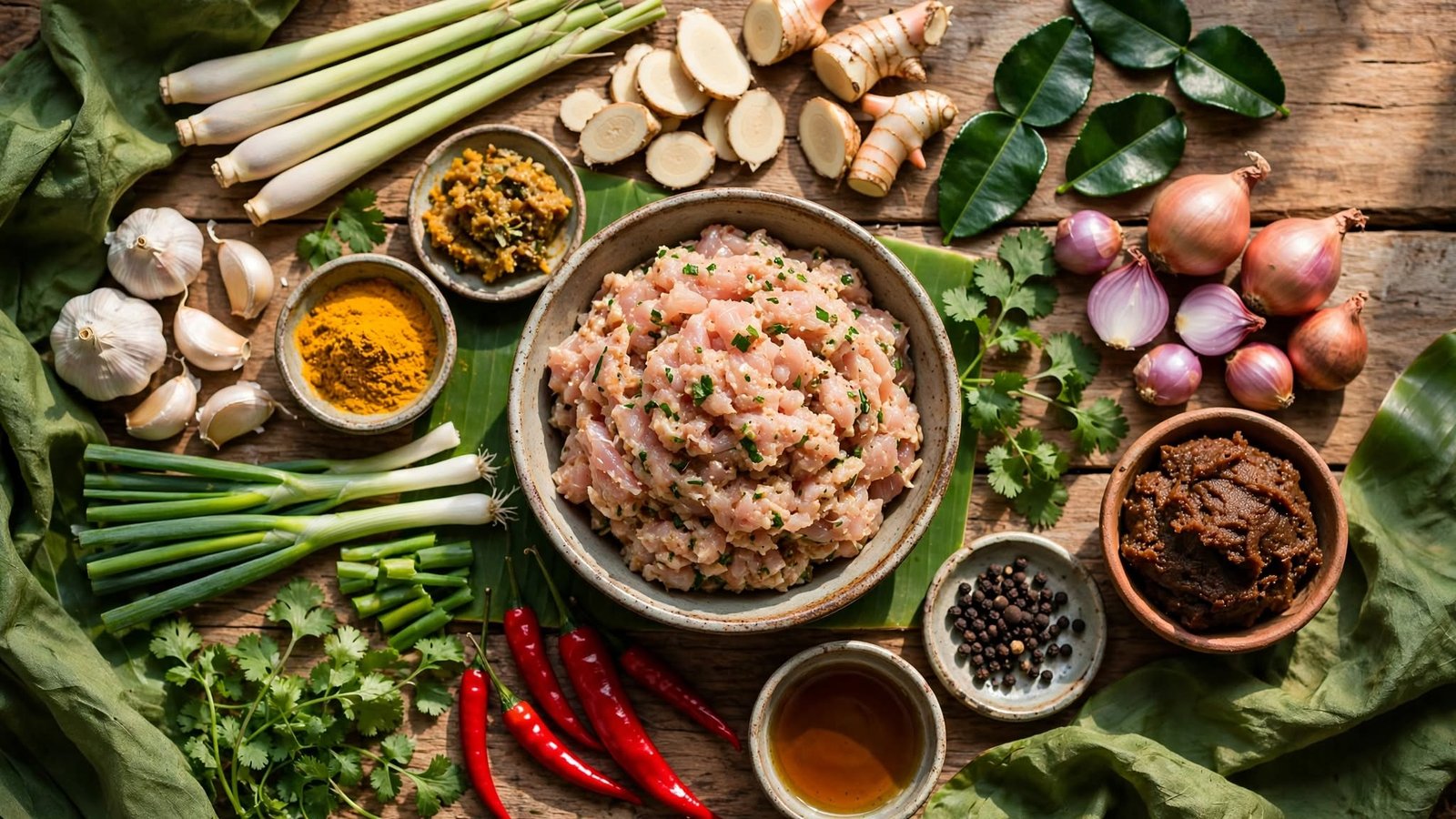
Kroeung is the real answer here, not chili. This aromatic paste built from lemongrass, galangal, turmeric, garlic, shallots, and kaffir lime forms the base of the whole dish. None of those ingredients bring heat on their own.
Lemongrass brings brightness. Galangal adds warmth, sharper than ginger but still nowhere near spicy. Turmeric contributes earthiness and color. Kaffir lime rounds everything out with something almost floral.
Hence, the flavor comes from complexity, layers stacking on top of each other, not from your mouth burning.
Because Cambodian cooking generally favors balance over intensity, this pattern shows up across most Khmer dishes, not just the patties. Compare that to a dish built around fresh chili as the main event, and the difference becomes obvious fast.
How Khmer Spice Levels Compare to Other Cuisines
People often lump Cambodian food in with Thai or Vietnamese cooking, since all three share the same region. That assumption trips a lot of people up. Thai cooking leans hard into chili heat in plenty of its signature dishes. Khmer cooking just does not chase that same intensity.
If you walked in expecting Thai level spice, a Khmer chicken patty will probably surprise you. It leans more towards a mellow profile. The heavy lifting comes from aromatics, not heat, and that is intentional, not an oversight.
Vietnamese cooking sits somewhere in between, often built around fresh herbs and fish sauce with a lighter touch overall.
Khmer cooking adds that extra step of pounding a full aromatic paste. This gives dishes like this patty more depth without needing chili to get there.
Curious how mild these patties actually taste in person. Ordering one and tasting it yourself settles that question faster than any description ever could.
What About Ingredient Sensitivities Beyond Spice
Spice level is not the only thing people worry about before trying something new. Because Khmer cooking relies heavily on fish sauce, someone unfamiliar with that ingredient might wonder how strong that flavor actually comes through.
In a well-balanced patty, fish sauce plays a supporting role, adding depth rather than dominating the taste. Additionally, some people ask about shellfish, since certain Southeast Asian pastes include shrimp paste for extra umami.
A properly labeled patty makes this clear, so anyone with allergies or dietary restrictions can check before ordering. You can also ask directly about specific ingredients if you have a known sensitivity.
Garlic and onion show up in most versions too, contributing sharpness rather than heat. For anyone sensitive to these ingredients specifically, checking with the kitchen beforehand clears up any uncertainty quickly. All in all, recipes can vary slightly between kitchens even within the same general style.
Does Any Version Actually Bring Heat
Some recipes do add a small amount of chili to the mixture. It usually rounds out the background rather than dominating it.
So, even in these versions, chili plays a supporting role, not the lead. Besides, the aromatics already carry so much flavor on their own, most cooks add heat sparingly, if at all.
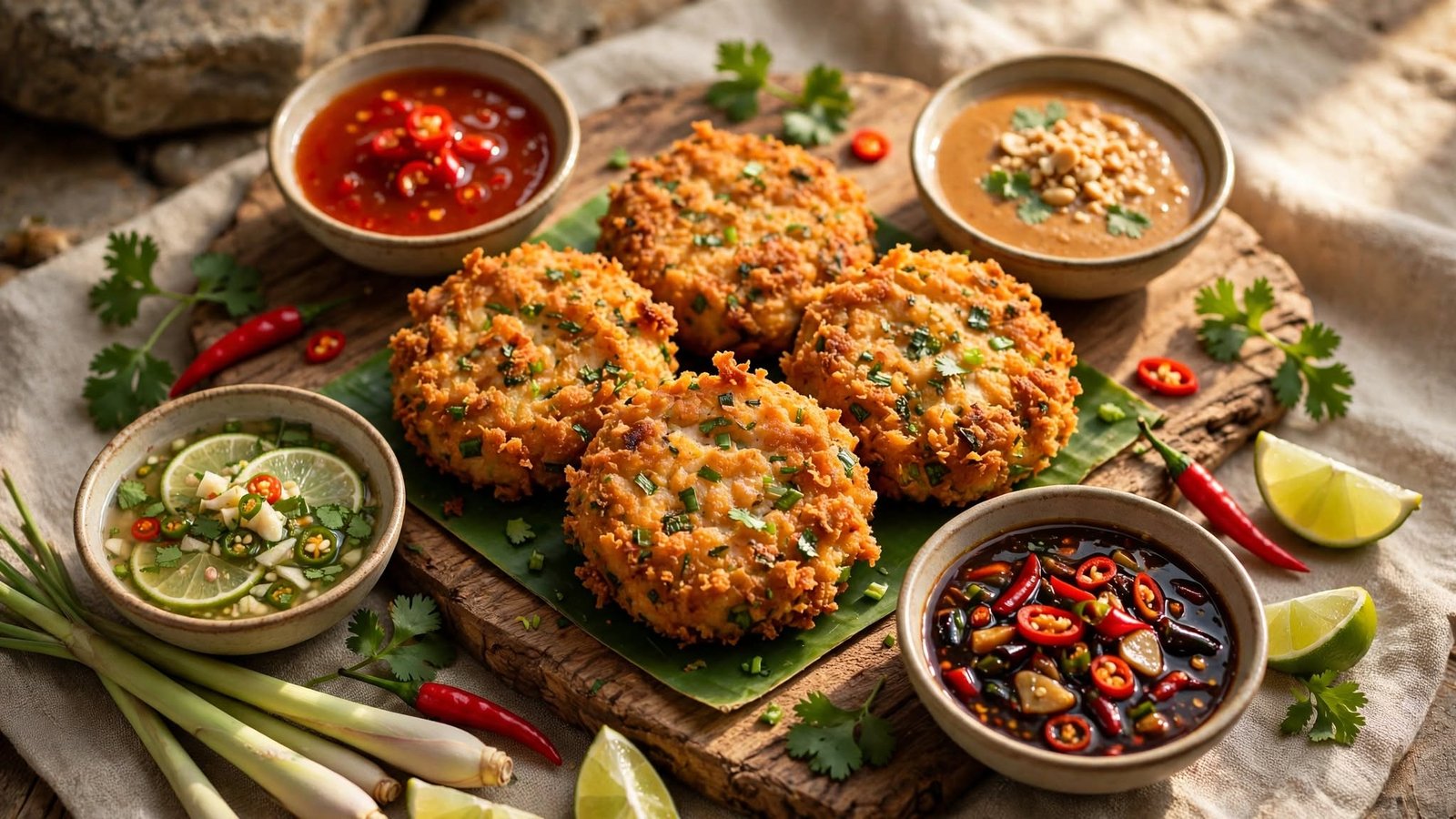
If you do want more spice, the dipping sauce is really where that decision happens. A traditional tuk trey with extra bird’s eye chili mixed in adds real heat on the side. That way, you control the spice level yourself instead of baking it into the patty.
Additionally, some diners add fresh chili flakes or hot sauce at the table. This adjusts the heat to their own preference without changing the actual recipe.
Who Will Actually Enjoy This Dish
Anyone nervous about ordering something spicy can relax here. The flavor comes from aromatics rather than chili. Because of this, these patties work well for people with a lower spice tolerance who still want something genuinely flavorful.
This is not a bland dish by any means; it is just not a hot one. Meanwhile, people who love bold, layered flavor but avoid heat for medical or personal reasons often find real relief here.
Khmer cooking offers that without the intensity of spicier regional cuisines. This dish opens the door to Southeast Asian flavor without the intensity some people actively avoid.
For anyone who does want heat, that option still exists through the sauce, not the patty. Nobody gets left out here. The base dish stays approachable, and the spice level adjusts based on what you actually want that day.
Bringing It All Together
So, to answer the real question, are Khmer chicken patties spicy?
The honest answer is no, not by default. The flavor comes from a genuinely complex aromatic paste built on lemongrass, galangal, turmeric, and kaffir lime.
Chili heat has nothing to do with it. Anyone wanting more spice can always add it through the dipping sauce instead.
At Turkey Berry Halal, our Khmer chicken patties get made fresh with fully halal-certified ingredients. The real flavor speaks for itself. Curious to taste the difference for yourself. Check the menu online, or come by and see exactly what we mean.