A dish this popular should come with a simple answer, yet whether Singapore Noodles count as halal depends entirely on how a specific restaurant prepares them.
The traditional recipe includes ingredients that clash directly with halal dietary rules. It surprises a lot of people expecting a straightforward yes or no.
This guide breaks down exactly what makes traditional Singapore Noodles non-halal, what changes in a halal-certified version, and how to order with confidence.
Why Traditional Singapore Noodles are Not Automatically Halal?
Classic Singapore Noodles are made using char siu. It is a sweet, slow-roasted pork that gives the dish its signature smoky flavor. Authentic Singapore Noodles cannot be made without it.
Pork sits firmly outside halal dietary guidelines, which immediately disqualifies the traditional version from being considered halal in its standard form. This single ingredient trips up more diners than anything else in the dish.
Beyond the pork itself, some restaurants also use Shaoxing wine in their sauce base, a common ingredient in Cantonese cooking that adds depth of flavor.
Since alcohol is prohibited under halal guidelines, this ingredient creates a second potential issue even in versions that happen to skip the pork.
So, diners cannot assume a dish is halal just because it looks similar to what they usually order, since both the protein and the sauce need checking.
What Changes in a Halal-Certified Version?
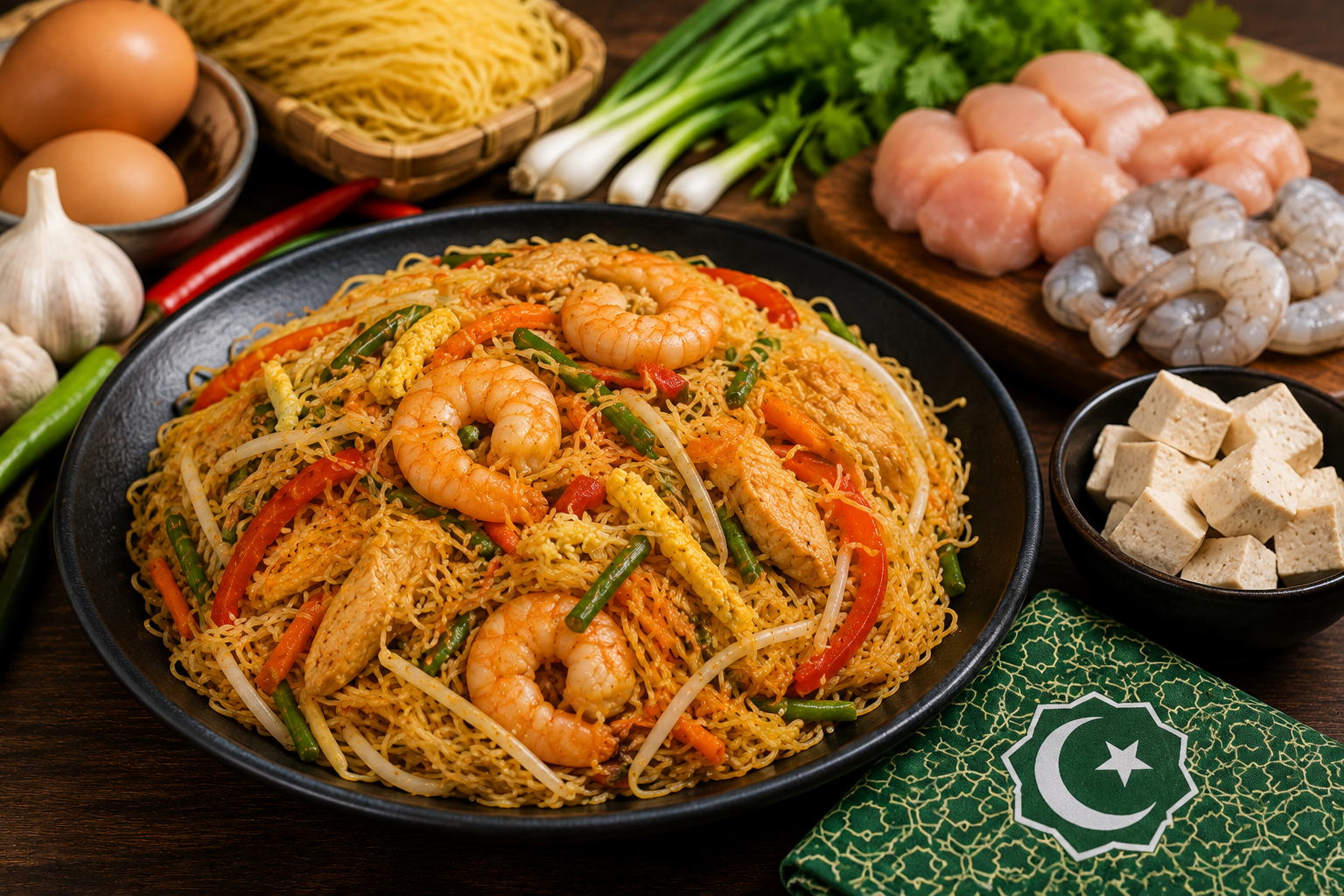
A properly halal-certified Singapore Noodles swaps out pork entirely. They typically replace char siu with halal-certified beef or chicken prepared using a similar sweet, caramelized marinade.
The substitution keeps the flavor profile close to the traditional dish while removing the ingredient that caused the biggest conflict in the first place.
Shrimp usually stays in the dish unchanged, since seafood is generally considered halal by default across most interpretations.
Sauce ingredients get reviewed carefully too in a proper halal kitchen. Using any alcohol-based additions, including Shaoxing wine or certain soy sauce blends that contain trace alcohol from fermentation. The need to replace them with halal-compliant alternatives is mandatory.
Curious how close a halal version actually tastes to the original recipe? Trying one firsthand is honestly the best way to judge for yourself.
How To Confirm A Restaurant’s Singapore Noodle Is Actually Halal?
Always ask about the ingredients and halal compliance directly. Usually, menu descriptions alone rarely specify every ingredient detail needed to confirm halal status.
A trustworthy restaurant should be able to explain exactly which protein they use. Also, ask to confirm whether their sauce contains any alcohol-based ingredients.
Restaurants that hold official halal certification typically display this clearly. You would see the certification mentioned on their menu or somewhere visible in the restaurant itself.
Cross-contamination deserves attention too, not just the ingredients themselves. A kitchen preparing both halal and non-halal dishes on the same equipment without proper separation protocols can compromise even a correctly substituted dish.
Genuinely halal-certified restaurants maintain dedicated preparation processes specifically to avoid this kind of contamination. It gives diners real confidence rather than just a promise on paper.
Why Does the Protein Matter?
Halal compliance is at the core of the dish. The use of pork isn’t the only non-halal component of the dish. The sauces, seasoning, and sometimes cooking oils change the taste game entirely.
A restaurant that takes halal preparation seriously reviews every component of the dish, not just the most obvious one.
This thoroughness is exactly what separates a restaurant that genuinely understands halal requirements from one simply removing pork and calling it done.
For diners who care about strict compliance, this level of detail matters enormously. A single overlooked ingredient can undo an otherwise careful preparation.
Choosing a restaurant that understands this complexity saves you from having to interrogate every single component yourself before ordering.
Ordering With Confidence
Understanding what makes Singapore Noodles halal or non-halal puts you in control of your next order, rather than guessing based on assumptions.
Traditional versions built around pork and alcohol-based sauces do not meet halal standards. A properly prepared substitute can deliver the same bold curry flavor without any compromise.
At Turkey Berry Halal, our Singapore Noodles are prepared entirely with halal-certified ingredients. From the protein down to the sauce, every element is picked with careful consideration, so you can order without a second thought.
Ready to taste the difference for yourself? Our menu is just a click away.