A single wrong noodle choice can turn a perfect plate of Singapore Noodles into a mushy, clumped disappointment.
Getting the noodle type right matters more than most people realize, since this dish depends entirely on a specific texture to work properly.
This guide breaks down exactly which noodle goes into proper Singapore Noodles, why that choice matters, and how to spot the real thing versus a version made with the wrong noodle entirely.
Noodle That Defines This Dish
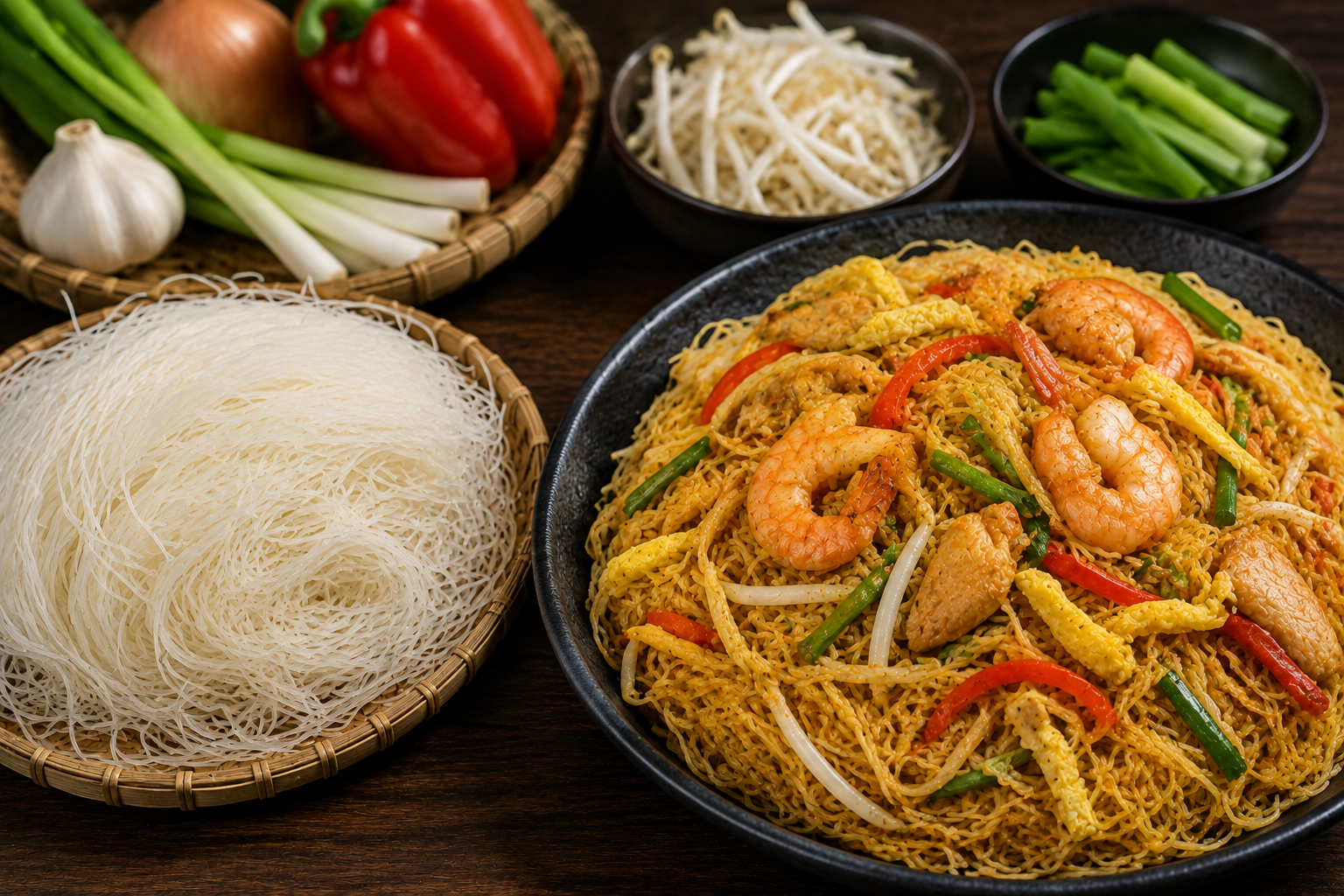
Singapore noodles rely specifically on thin rice vermicelli, sometimes labeled rice sticks or bee hoon on packaging.
These noodles are made from rice flour and water, giving them a light, slightly chewy texture that soaks up flavor without turning heavy or soggy.
Unlike thicker egg noodles or wheat based lo mein noodles, rice vermicelli stays delicate, which lets it absorb the curry powder and sauce evenly across every strand.
This noodle choice is not interchangeable with other options, even though some restaurants try to cut corners.
Using a thicker noodle changes the entire eating experience, since Singapore Noodles depend on that light, almost translucent quality to balance out the richer proteins and bold curry flavor sitting alongside it.
So, when a restaurant swaps in a heavier noodle, the dish stops feeling like authentic Singapore Noodles at all.
For people with gluten allergies, rice noodles work as a great option. Also, rice noodles do not affect gut health the way wheat noodles do. Oftentimes, people without any particular reason love to eat rice noodles.
Why Rice Vermicelli Works So Well In This Dish
Rice vermicelli cooks incredibly fast, usually needing just a quick soak in warm water before it goes into the wok.
This speed matters in a stir fry setting, since the noodles need to pick up flavor from the curry powder and sauce without overcooking or turning mushy during the final toss.
Overcooked vermicelli clumps together and loses that light texture entirely, which ruins the dish even if every other ingredient is prepared correctly.
The noodle’s neutral flavor also plays a real role here. Rice vermicelli does not compete with the curry powder, shrimp, or char siu pork sitting alongside it.
Instead, it acts almost like a canvas, carrying the seasoning without adding a strong flavor of its own. Curious how this noodle actually tastes once properly stir fried? Trying it firsthand makes the texture difference obvious within the first bite.
How To Identify Real Rice Vermicelli At The Store
Shoppers looking for the right noodle should check packaging labels carefully. Rice vermicelli sometimes goes by different names depending on the brand or country of origin.
Common labels include rice sticks, bee hoon, mei fun, or simply rice vermicelli, and all of these typically refer to the same thin, translucent noodle made from rice flour.
Thickness matters too. Rice vermicelli should look noticeably thinner than rice noodles used in dishes like pad thai or pho, which use a wider, flatter noodle entirely.
Checking the ingredient list also helps confirm authenticity. Real rice vermicelli should list rice flour and water as the primary ingredients, without wheat flour mixed in, which sometimes happens in lower-quality blends.
What Happens When Restaurants Use The Wrong Noodle
Some restaurants substitute egg noodles or thicker rice noodles into their Singapore Noodle, usually to cut costs or simplify their kitchen’s noodle inventory.
While this substitution technically still resembles the dish visually, the texture and overall eating experience change noticeably. Thicker noodles absorb less curry flavor per bite and often feel heavier on the palate than the dish was ever meant to be.
For diners who care about getting an authentic version, asking directly what type of noodle a restaurant uses can save disappointment before ordering.
A restaurant confident in its preparation should have no problem confirming they use genuine rice vermicelli rather than a cheaper substitute.
Getting The Real Thing Every Time
Understanding the noodle behind Singapore Noodle helps you recognize an authentic version the moment it arrives at your table.
Thin rice vermicelli remains the only noodle that delivers the light, flavor absorbing texture this dish depends on, and settling for a substitute simply is not the same experience.
At Turkey Berry Halal, every plate of Singapore Noodles gets made with genuine rice vermicelli and fully halal-certified ingredients, prepared the way the dish is meant to taste.
Ready to try it right? Our menu is just a click away.